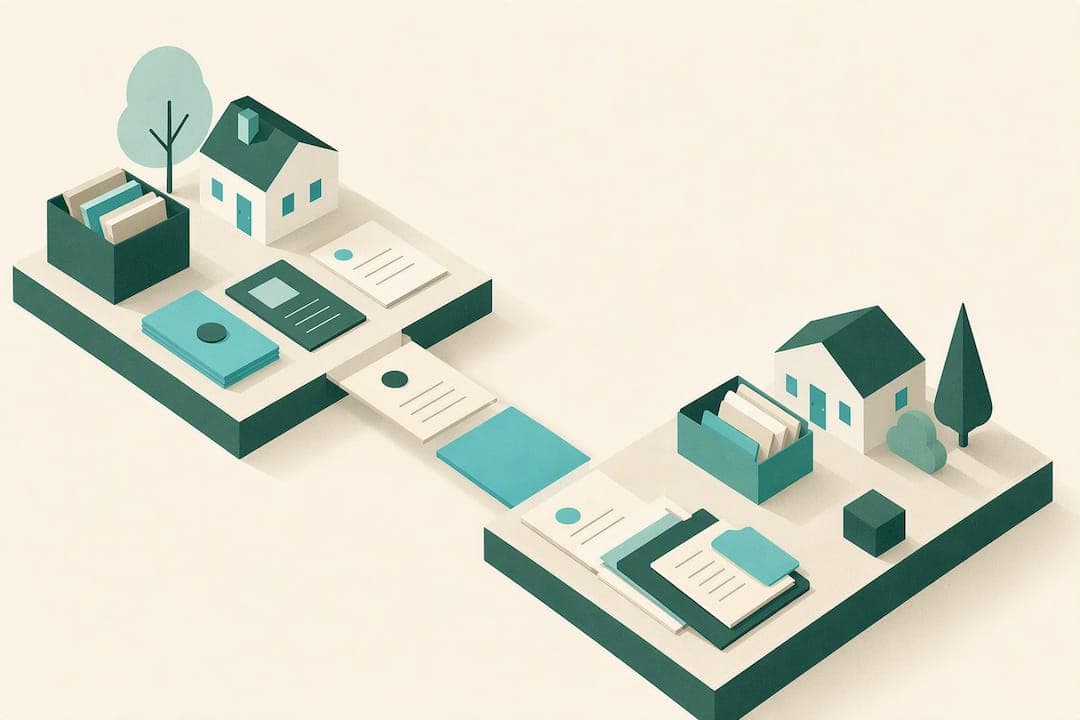
Yes, you can meaningfully coordinate care from a distance. Long distance caregiving works best when you organize key documents early, set a simple communication plan with the people already on the ground, recruit at least one or two local helpers, and pick technology that's easy for everyone to use. None of it requires living nearby.
TL;DR:
- Setting up online banking and automating bill payments prevent missed expenses and reduce administrative burdens for remote caregivers.
- Joining telehealth visits and maintaining a shared medication list keep remote caregivers informed and involved in medical decisions.
- Building a local support network with clear roles and boundaries ensures reliable in-person assistance without requiring relocation.
- Organizing legal documents, such as advance directives and HIPAA releases, ensures quick access to vital information during emergencies.
- Utilizing simple caregiving apps can improve information sharing and task coordination but requires ongoing updates to stay effective.
Table of Contents
- What Does Long Distance Caregiving Actually Mean?
- Key Tasks Remote Caregivers Can Own
- Communication and Technology That Actually Work
- Building a Local Support Network You Can Count On
- Supporting the Primary Caregiver Without Getting in the Way
- Getting Your Paperwork and Legal Access in Order
- Watching for Burnout Before It Takes You Down
- Where an App Like Kincarer Fits Into the Picture
- What I've Learned Watching Families Navigate This
- Try Kincarer During Your Next Visit
- Where to Learn More
- Sources
What Does Long Distance Caregiving Actually Mean?
The National Institute on Aging defines a long-distance caregiver as anyone providing support to someone who lives an hour or more away. That's a wide net. It catches the daughter three states over and the son who's a ninety-minute drive from his mother but still can't get there for every doctor visit.
Typical responsibilities fall into a predictable pattern:
- Managing finances, bill-paying, and insurance paperwork
- Arranging and vetting in-home care or agency services
- Researching medical conditions and treatment options
- Attending telehealth appointments remotely, with permission
- Handling legal and financial paperwork the on-site caregiver has no time for
The person nearby usually handles daily hands-on tasks: meals, transportation, medication administration. You handle the paperwork and phone calls that pile up behind the scenes. That division isn't a consolation prize. It's often where the most leverage is.
Key Tasks Remote Caregivers Can Own
A systematic review of long-distance caregiving research found that caregivers who live far away still contribute real, measurable support across financial, logistical, and emotional categories. The tasks below are where that contribution tends to matter most.
- Take over bill-paying and finances. Set up online banking access or automatic payments so nothing gets missed because a check sat on a counter for three weeks.
- Handle prescription refills and equipment orders by mail. Most pharmacies and medical supply companies now support remote refill requests and shipping.
- Join telehealth visits. With the patient's consent, dial into appointments so you hear the same information the on-site caregiver hears, instead of a secondhand summary.
- Keep a master medication list and contact sheet. One updated document, shared with everyone involved, saves repeated calls asking "what's she taking now?"
- Track insurance claims and benefits paperwork. This is tedious, time-consuming, and exactly the kind of task that's easier from a laptop than from a hospital waiting room.
Owning these tasks does two things at once: it lifts real weight off the primary caregiver's shoulders, and it keeps you plugged into what's actually happening instead of guessing.
Communication and Technology That Actually Work
The single biggest failure point in remote caregiving isn't distance. It's the information gap. AARP's research on long-distance caregiving points to remote caregivers often getting only vague summaries instead of real details, which breeds anxiety and duplicated effort. Closing that gap starts with a communication plan, not an app.
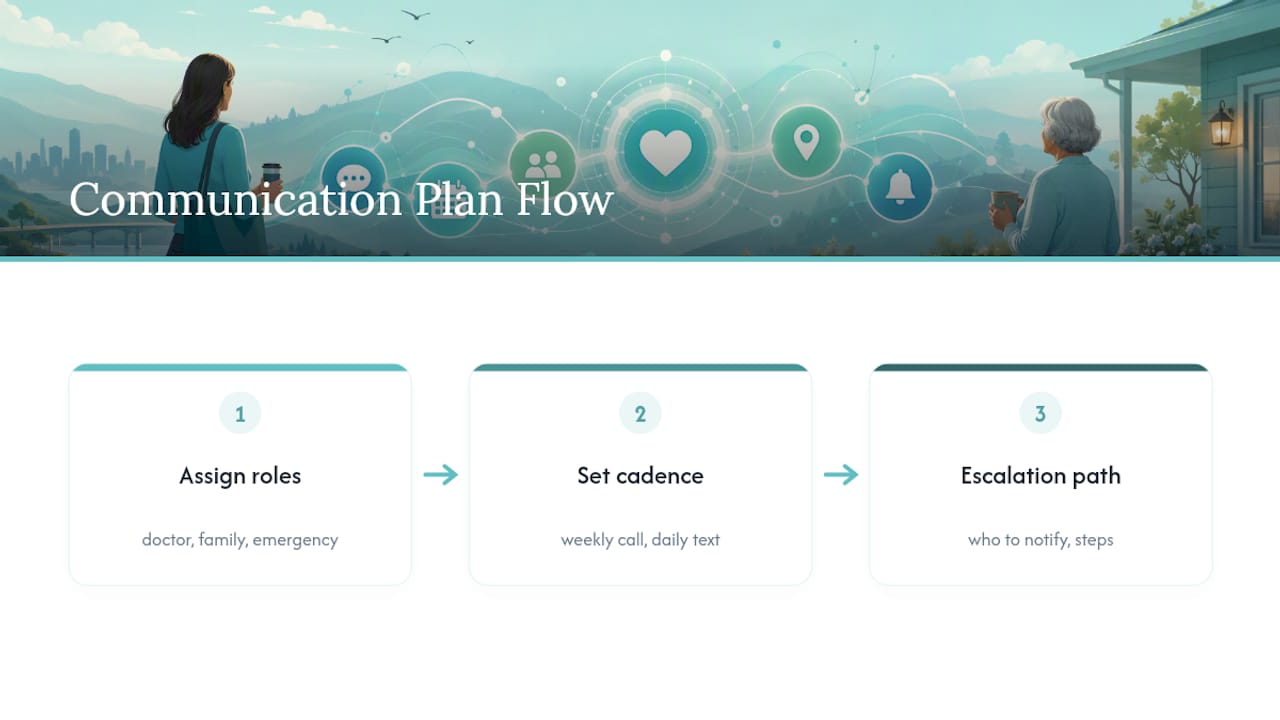
A workable plan assigns roles clearly: who calls the doctor, who updates the family group text, who's the emergency contact. Set a cadence, maybe a weekly call and a daily check-in text, and agree on an escalation path for anything urgent.
For technology, keep it simple. Telehealth lets you sit in on appointments. Shared calendars stop the "wait, who took Mom to her cardiology appointment?" confusion. Caregiver apps consolidate tasks, notes, and reminders in one place instead of scattered texts. Remote monitoring, things like fall-detection sensors or wearables, has grown fast: AARP reports usage climbed from 13% in 2020 to 25% by 2025. Just get explicit consent before installing anything that tracks a person's movement or location.
Pro Tip: Before your next visit, ask the on-site caregiver to text you three things they wish you'd handle without being asked. That list becomes your visit agenda.
When you do visit, plan around concrete goals: medical appointments, a medication review with the pharmacist, a walk-through for home-safety hazards, and a real, scheduled break for whoever's been carrying the daily load.
Building a Local Support Network You Can Count On
You don't need to move back home. You need two or three reliable local contacts and a way to know they're actually checking in. Start with people already close by:
- Neighbors who see your relative regularly and can flag changes
- Faith communities or senior centers with existing visitor programs
- Area Agencies on Aging, which coordinate services and can connect you with vetted local resources
- Volunteer or friendly-visitor programs run through local nonprofits
Be specific about what you're asking for. A neighbor who agrees to "check in" needs a clear definition: does that mean a wave from the driveway or a knock on the door twice a week? Put boundaries in writing, even informally, so nobody feels stuck with more responsibility than they signed up for.
If you formalize a roster, note who does what and how they report back, even a simple shared note works. Professional geriatric care managers can also assess needs and coordinate services, though their hourly rates vary widely; AARP notes costs can run into the hundreds of dollars per hour in some markets, so ask your Area Agency on Aging about lower-cost alternatives first.
Supporting the Primary Caregiver Without Getting in the Way
The person doing daily hands-on care is at the highest risk of burnout, and your job is to lighten that load, not just check in on it.
Practical support means arranging paid respite care, covering the cost of a few hours of help each week, and taking administrative tasks entirely off their plate. Emotional support means calling to ask how they're doing, not just how the care recipient is doing, and actually scheduling guilt-free breaks rather than vaguely offering to "help anytime."
- Pay for or arrange respite care directly, don't just suggest it
- Handle at least one recurring admin task permanently (bills, insurance, refills)
- Call the primary caregiver on a separate schedule from care updates
- Keep shared documentation so nobody has to repeat themselves
Remote monitoring adoption jumped from 13% to 25% between 2020 and 2025, which tells you families are actively looking for ways to reduce the burden of constant in-person oversight. A single shared document, one source of truth everyone can check, does the same job for less money and no installation.
Getting Your Paperwork and Legal Access in Order
You can't act fast in an emergency without the right paperwork already in place. Gather these before you need them:
- Advance directives and a living will, spelling out treatment preferences
- Durable power of attorney, covering both healthcare and financial decisions
- A current medication list with dosages and prescribing physicians
- Insurance cards and policy numbers, plus Medicare or Medicaid information
- Signed HIPAA release forms, so doctors can legally speak with you directly
That last item trips up more families than anything else. Without a signed release on file, a provider can't discuss your relative's care with you over the phone, no matter how close your relationship is. Ask the primary physician's office for their specific release form and get it signed during a visit. Keep both a physical emergency binder and a secure digital backup, since paper alone doesn't help you when you're states away.
Watching for Burnout Before It Takes You Down
Long distance caregiving carries its own version of burnout, often less visible than the exhaustion of daily hands-on care but no less real. Watch for irritability during calls, dread before checking in, or a growing sense that nothing you do is enough.
- Schedule your own breaks, not just the primary caregiver's
- Connect with a peer support group for distant caregivers
- Consider a few sessions with a counselor if anger or guilt start crowding out everything else
- Bring in a geriatric care manager if coordination is consuming hours you don't have
Anger, oddly, is one of the most common and least discussed caregiver emotions. It usually isn't about the person you're caring for. It's about distance, helplessness, and the sense that you're always one step behind.
Where an App Like Kincarer Fits Into the Picture
Every problem above traces back to one thing: information doesn't travel well across distance. A caregiving app can address that gap specifically. A shared care circle keeps siblings and other family members looking at the same task list instead of five different group texts. Task assignment and appointment tracking mean nobody has to remember who's handling what. Medication reminders and cloud-based document storage put the paperwork you just organized somewhere everyone can actually find it.
When you're evaluating any caregiving app, run it through a short checklist:
- How long does setup actually take, and can a non-technical relative manage it?
- What privacy controls exist around medical information and location data?
- Who in the family is responsible for keeping information current?
That last question matters more than most families expect. An app is only as good as the person willing to update it.
What I've Learned Watching Families Navigate This
Technology closes the information gap, but it doesn't close the emotional one. The hardest part of long distance caregiving isn't logistics. It's the guilt of missing a bad day, or the friction between siblings who see the situation differently because they're standing in different rooms of it.
Prioritize the relationships over the tools. Clear roles prevent more resentment than any app ever will.
— Rex
Try Kincarer During Your Next Visit
You've got the strategies: organized paperwork, a communication plan, local helpers on call. Kincarer gives that plan a home. It's built specifically for family caregiving coordination, shared care plans, task assignment, medication reminders, and document storage in one place instead of scattered across texts and sticky notes.
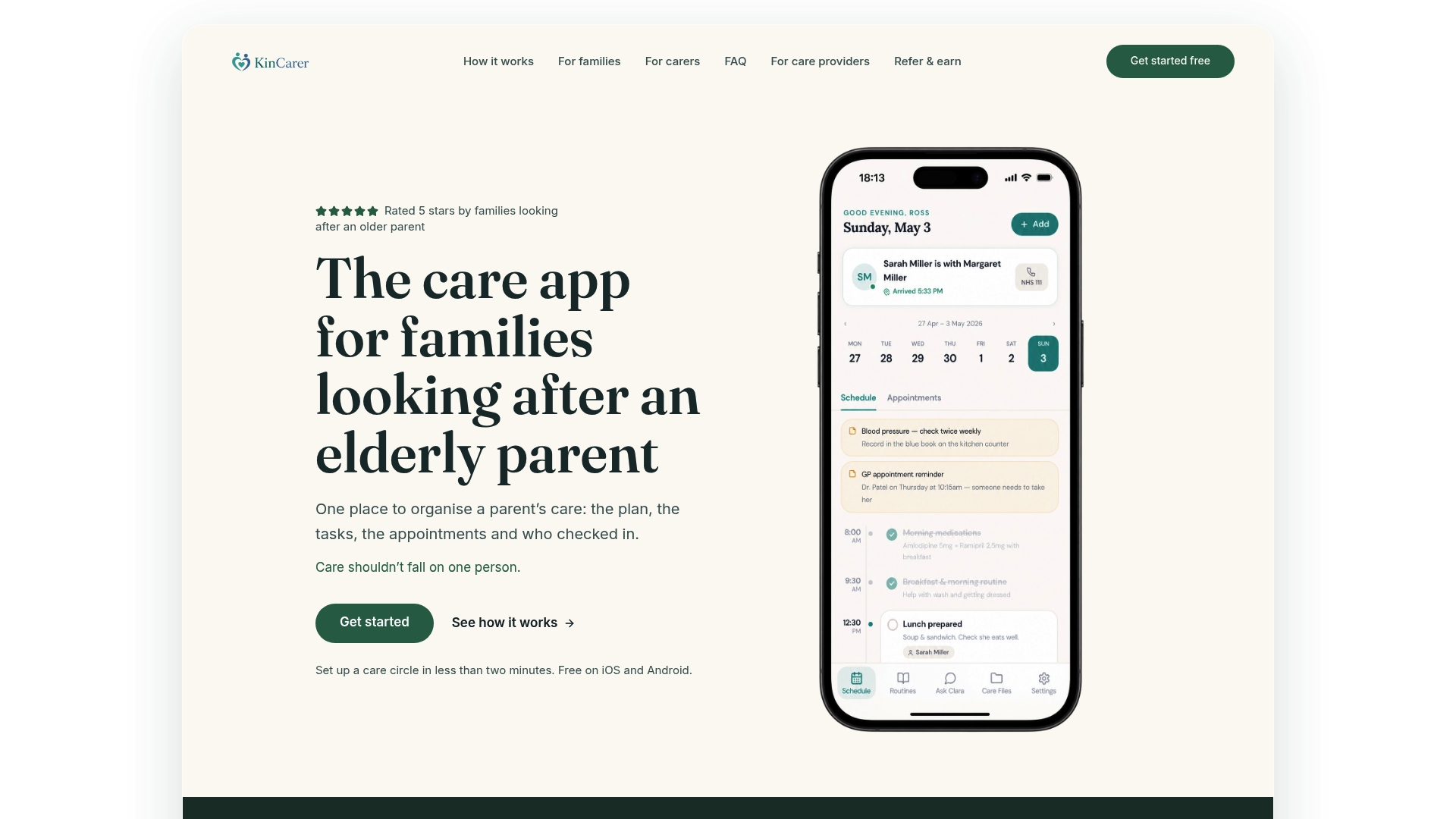
A good way to test it: set it up during your next planned visit. Load in the medication list, assign the pharmacy refill task to yourself, and ask one sibling to try the check-in feature for a week. If your relative is connected to a care organization or agency, Kincarer's options for care organizations may also be worth a look for coordinating with paid support alongside family. Otherwise, start with the Kincarer app and see whether the free plan covers what your family actually needs before committing to more.
Where to Learn More
For deeper guidance beyond this playbook, the National Institute on Aging's long-distance caregiving guide covers the fundamentals in more depth. The Alzheimer's Association's page on long-distance caregiving is useful for locating Area Agencies on Aging and regional support services, and AARP's caregiving research tracks how technology adoption is changing the field year over year.