Call 999 or 112 for anything life-threatening. Call 101 for non-emergency police matters, and 111 when you need urgent NHS advice, but it’s not a 999 situation. All three calls are free, and you’ll be asked for your location and the nature of the emergency, so know both before you dial.
TL;DR:
Emergency contact lists should be reviewed and updated every six to twelve months or whenever key details like phone numbers, medications, or addresses change.
Physical formats such as wallet cards, fridge sheets, and laminated posters provide quick access and should be kept in multiple secure locations, with dates for currentness.
For vulnerable or elderly individuals, tiered contact arrangements and detailed medical summaries are crucial to ensure prompt and effective emergency responses.
Digital tools like shared care plans and ICE entries complement printed lists but require regular synchronization to prevent outdated information.
Always confirm with individuals before listing them as emergency contacts to ensure they are willing, capable, and informed of their responsibilities.
Table of Contents
-
What is an emergency contact list, and which numbers matter most?
-
Printable templates: wallet cards, fridge sheets and business posters
-
How a shared care plan keeps contacts current when it counts
What is an emergency contact list, and which numbers matter most?
An emergency contact list is a written record of who to call, in what order, and for what kind of problem. For UK households, that starts with three numbers you should know without thinking, and extends to the helplines that matter for your specific circumstances.
999 or 112 get you through to police, ambulance, fire and coastguard. They work identically in the UK, so it doesn’t matter which one you dial. Use either when someone’s life, safety, or property is at immediate risk: a fall with a suspected fracture, chest pain, a fire, or a break-in in progress. The operator will ask what service you need, then your exact location, then what’s happening. Keep those three details ready in your head, especially if you’re calling on behalf of an elderly parent who can’t speak clearly themselves.
101 is for the police when there’s no immediate danger: reporting a theft after the fact, a suspicious car outside your mum’s house, antisocial behaviour, or a lost person who isn’t in immediate danger. Calls to 999, 112 and 101 are all free, so there’s never a reason to hesitate over cost when something feels wrong but isn’t yet a crisis.
111 connects you to NHS urgent advice when you’re not sure whether something needs A&E, a GP appointment, or can wait. It’s the number to use for a worsening infection, medication concerns, or confusion about symptoms in someone you care for.
Beyond the big three, a genuinely useful list includes:
-
Samaritans (116 123) — free, 24-hour emotional support for anyone struggling, including carers experiencing burnout.
-
National gas emergency line (0800 111 999) — for a suspected gas leak or carbon monoxide risk.
-
Your energy and water suppliers’ emergency numbers — for power cuts or burst pipes affecting a vulnerable person’s home.
-
The Priority Services Register — a free scheme letting vulnerable customers register with energy and water suppliers for extra support during outages, including advance warning of planned work and priority reconnection.
If you look after someone elderly, registering them for the Priority Services Register is one of the more overlooked steps in emergency preparedness. It costs nothing and means a supplier already knows this household needs extra care if the electricity goes down in winter.
For coastal areas, HM Coastguard is reached via 999; the administrative contact numbers listed on gov.uk are for non-urgent enquiries only, never for an active incident.
Printable templates: wallet cards, fridge sheets and business posters
A list stuck in your phone’s notes app is better than nothing, but it fails the moment your phone is dead, lost, or in another room. Printed formats solve that, and each suits a different situation.
-
The wallet card — a folded or laminated card small enough to carry daily. It should list the person’s name, date of birth, one or two emergency contacts with phone numbers, their GP surgery, and any critical allergy or condition (diabetes, epilepsy, anticoagulant medication). Keep it brutally short; a paramedic needs seconds, not paragraphs.
-
The fridge sheet — a single A4 page, held with a magnet, listing full contact details for family, GP, pharmacy, and key-holder information. This is the copy a paramedic or neighbour is trained to look for in a domestic emergency, so it needs more detail than the wallet card: current medicines, dosages, and any access instructions.
-
The folder insert — a page that lives inside a larger care folder alongside prescriptions, care plans, and appointment letters. Useful for anyone managing several conditions or several professionals (GP, district nurse, social worker).
-
The business poster — a laminated A3 sheet by reception or a staff noticeboard, listing site-specific emergency contacts, the nearest defibrillator, and who holds first-aid responsibility on each shift.
When you’re designing any of these, use a font size no smaller than 14 point, and stick to high-contrast black text on white or pale yellow. Many of the people who’ll read this in a crisis, whether that’s your mum without her glasses or a first responder working fast, need it legible at a glance.
Exporting is simple: most word processors and even smartphone note apps let you “save as PDF” or “print to PDF” directly. If you’re laminating a wallet card, choose a matte finish so light doesn’t glare off it, and print two copies from the outset, because one always ends up creased in a coat pocket.
Pro Tip: Date every printed copy in small text in a corner. A dated card tells a paramedic or relative whether the information in front of them is current or six years old and possibly wrong.
What to include when caring for an elderly parent
A basic contact list tells someone who to call. A carer’s emergency plan tells them what to do next, and that difference matters enormously if you’re ever unavailable and someone else has to step in cold.
Start with contacts arranged in tiers, not a flat list. You need a primary contact (usually you), a backup contact who lives reasonably close, and at least one out-of-area contact who could coordinate by phone even if local roads or lines are disrupted. Before you write anyone down, confirm they’re actually willing and available. Carers UK frames this as a genuine written contingency plan, not a casual phone list, and that framing changes what belongs on the page.
The medical snapshot needs to be tight but complete:
-
GP surgery name and phone number
-
Regular pharmacy and its number
-
Current medicines with dosages, written on one line each (name, strength, frequency)
-
Known allergies
-
Major diagnoses a substitute carer would need to know immediately (dementia, heart failure, insulin-dependent diabetes)
Practical access details are just as important and often forgotten entirely. Where’s the spare key? Is there a door code or key safe combination? Does the alarm need disarming, and how? Is there a pet that needs feeding or letting out if your parent is taken to hospital unexpectedly? A stand-in carer arriving at 11pm with no idea how to get through the front door wastes precious time.
Note any legal or care preferences briefly: is there a lasting power of attorney in place, and who holds it? Is there a preferred hospital? Does your parent have a social worker or care manager, and if so, list their contact details alongside the family ones, since a substitute carer may need to reach a professional, not just a relative.
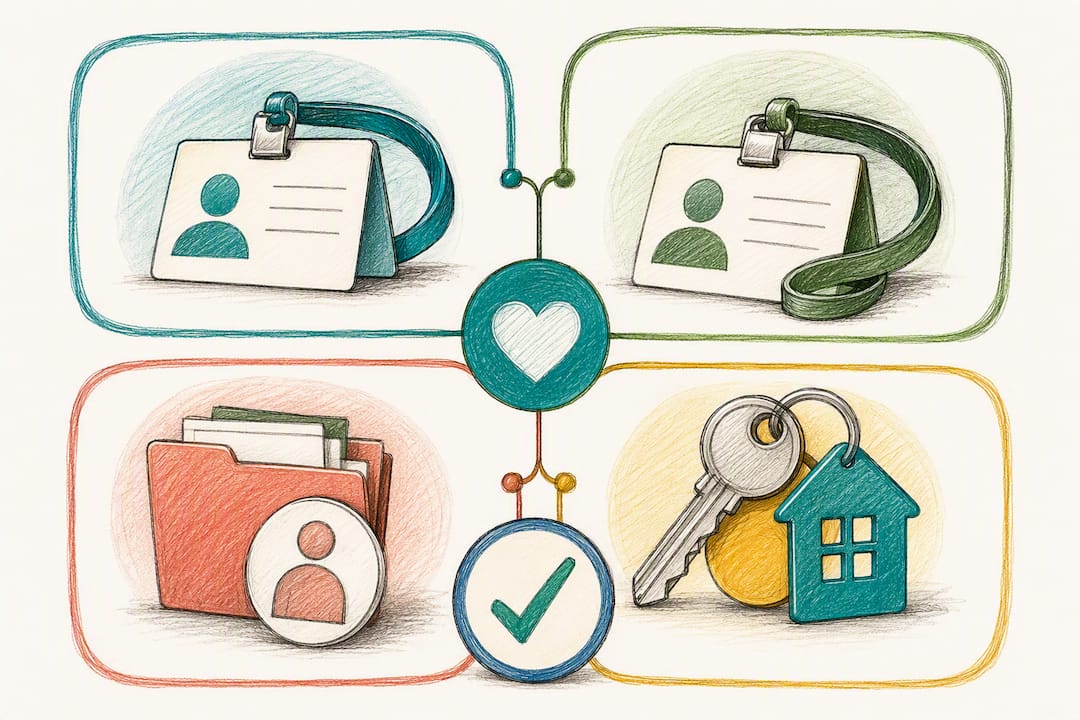
Local authorities have formalised this idea into ready-made documents. Angus Council’s carers emergency plan template includes fields for exactly this: primary and backup contacts, consent confirmation, and key-holder details, alongside an emergency card service that notifies your nominated contacts on your behalf if you’re suddenly unable to.
Finish the document with a short declaration line for each named contact to sign, confirming they understand what’s expected of them and agree to be contactable in that role. It sounds formal for a family document, but a signature turns a list of names into a set of understood commitments, which is exactly what you need when a decision has to happen fast.
Where to store and share the list so it’s always findable
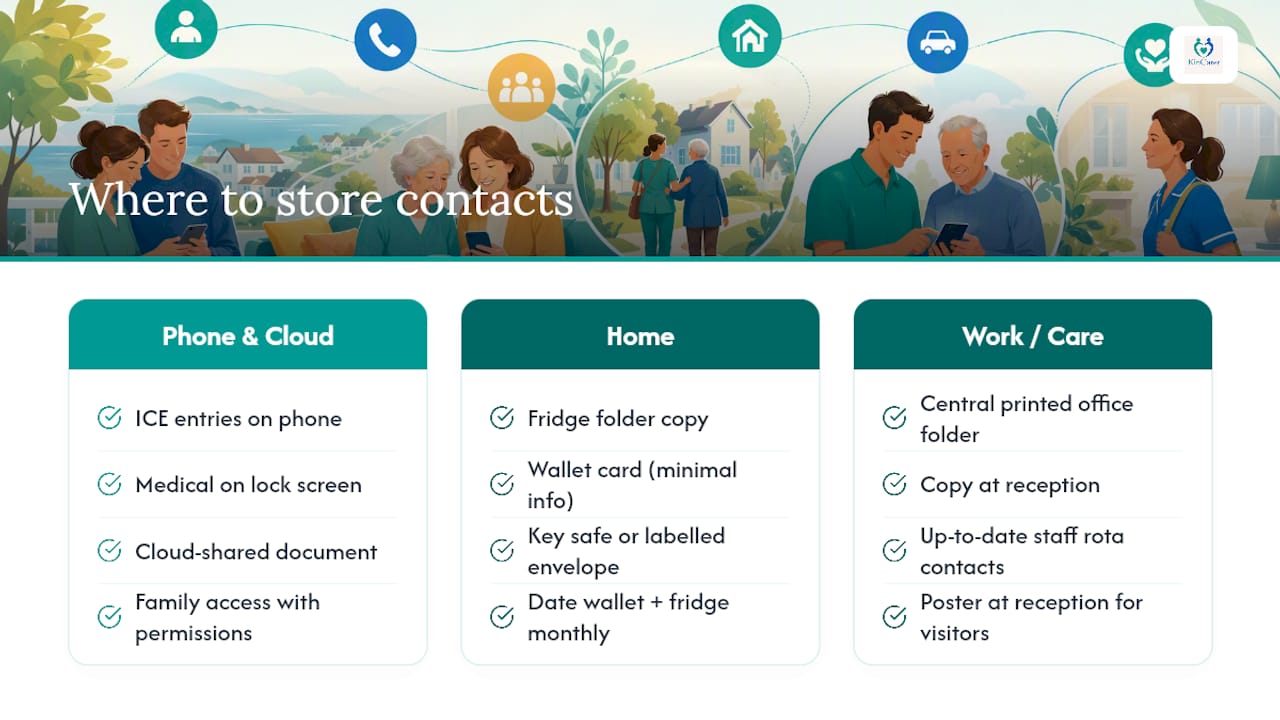
No single storage location is reliable on its own, so redundancy isn’t overkill here, it’s the whole point. Storing the same information in several places, both physical and digital, means responders and family members find it regardless of what’s gone wrong.
On your phone, set up ICE (In Case of Emergency) entries and add medical information to your lock screen, so a paramedic can see it without unlocking the device. Alongside that, a cloud-shared document, accessible to family with the right permissions, means an update made by one sibling is instantly visible to everyone else, rather than sitting unread in a message thread.
Physically, keep a copy in a fridge folder, a wallet card, and, if your parent lives alone, inside a key safe or a clearly labelled envelope by the front door for responders. Care settings with shared living arrangements often display a poster version at reception so any visiting professional can find it immediately.
Businesses need their own version of this redundancy: a central printed folder in the office, a copy with reception or whoever answers the phone, and up-to-date contacts for everyone on the staff rota, particularly if shifts run outside normal hours.
There’s a genuine trade-off between accessibility and security worth thinking through. A wallet card that’s easy for a paramedic to read is also easy for a stranger to read, so keep sensitive details like bank information off it entirely, and stick to what a first responder actually needs. Best practice guidance from carers’ organisations consistently recommends this layered approach: minimal information where it’s most exposed, fuller detail where access is more controlled.
Pro Tip: Keep the wallet card and the fridge sheet dated with the same month, so anyone comparing the two instantly knows if one has fallen out of sync with the other.
Keeping the list current: who updates it, and how often
An outdated contact list is arguably worse than no list at all, because it creates false confidence right when accuracy matters most.
-
Name one owner. Usually this is the main carer, but agree a named alternate too, so updating doesn’t stall if that person is away or unwell themselves.
-
Set clear review triggers. Any address change, a new medication, a change of GP, or a change in who’s available as a backup contact should prompt an update there and then, not at the next scheduled review.
-
Review on a fixed cadence regardless. Even with no obvious trigger, check the whole document every six to twelve months.
-
Run a short audit each time. Call the primary contact to confirm the number still works, confirm the key-holder is still willing and local, update the date stamp, and circulate the revised copy to everyone who holds one.
-
Keep a version history for business use. A simple log of who changed what and when means nobody’s ever working from two different versions of the same document.
How a shared care plan keeps contacts current when it counts
Paper templates and wallet cards solve the “grab it fast” problem. What they don’t solve is the update problem: someone has to remember to reprint the fridge sheet every time a phone number or medication changes, and in most families that job quietly falls to one exhausted person.
This is where a shared care plan earns its place alongside your printed copies rather than instead of them. When contacts, medication reminders, and handover notes for an elderly parent live in one shared care circle, every sibling or relative invited into it sees the same current information, rather than a version from three months ago buried in someone’s phone. Document storage in one place also means a scanned GP letter or care plan doesn’t get lost in an email thread nobody can find at 2am.
Kincarer’s Clara assistant can help family members search and summarise the non-clinical information already stored in the circle, useful when someone needs a quick answer at short notice. Clara doesn’t give medical, legal or clinical advice, and a digital tool of this kind is never a substitute for the printed wallet card or fridge sheet a paramedic actually needs to see in front of them.
Make the plan today, not after something goes wrong
Most families put this off, not because it’s hard, but because it never feels urgent until the moment it suddenly is. That gap between “I should really sort this” and actually writing the page down is where most emergency plans quietly fail.
Here’s the honest advice: don’t try to build the perfect document in one sitting. Create one page tonight. Add ICE to your phone and your mum’s phone. Tell two people, out loud, what you’d expect them to do if you called them at 2am. That’s it. That’s the whole first step.
Everything else, the laminated cards, the carers’ checklist, the folder of medical details, can follow once the basics exist. A rough plan today protects your family more than a polished one you’re still planning to start next month.
— KinCarer
How Kincarer helps you keep everyone on the same page
There are other ways to manage this: a paper folder in a kitchen drawer, a shared spreadsheet, a group chat everyone half reads. Each works until the moment someone’s away, a phone dies, or the one person who knew where everything was isn’t the one who picks up the call.
Kincarer is the alternative to carrying that whole system in your own head. It centralises emergency contacts, medication reminders, appointments and handover notes in one shared care circle, so any relative or carer you’ve invited can see exactly what’s happened and what still needs doing, without hunting through old messages.
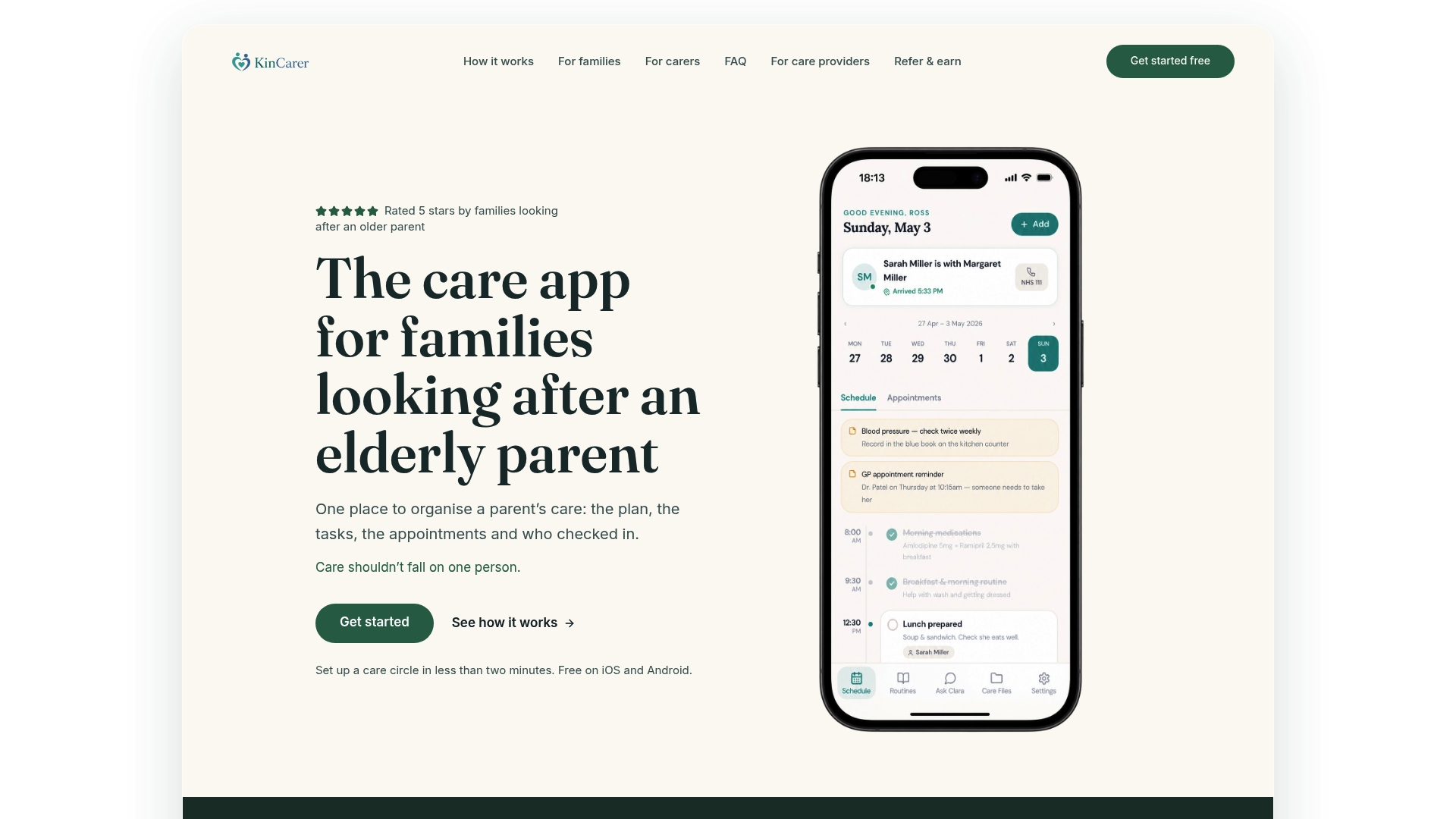
Every update one sibling makes, whether that’s a new consultant’s number or a change to a medicine dose, is visible to everyone else immediately. Clara, the built-in assistant, can help you find and summarise information already stored in your circle, though it never gives medical, legal or clinical advice, and it doesn’t replace your printed wallet card or fridge sheet. For families running care across several relatives or a wider support network, Kincarer for care organisations extends the same shared visibility to larger teams.
Start a free trial at Kincarer and add your first emergency contacts to a shared circle today.
Sources
For the numbers themselves, gov.uk’s guide to 999 and 112 explains exactly what to say when you call, and Contact the police covers when to use 101 instead. For the contingency planning side, Carers UK’s guide to creating a contingency plan and printable templates from local authorities such as Angus Council are both worth downloading and keeping to hand. Merton Council’s guidance on emergency planning for carers also sets out how to pair a minimal responder card with a fuller folder for substitute carers.
FAQ
How do I find my emergency contact list?
Check your phone’s health or safety app for ICE entries first, since most smartphones store this by default. If you’ve built a printed version, keep it somewhere fixed, like a fridge folder or your wallet, so you’re never relying on memory alone.
How do I list someone as an emergency contact?
Ask them directly first, confirm they’re happy to be called at short notice, then add their name, relationship, and a working phone number to your list, whether that’s your phone’s ICE settings or a shared document. Always confirm consent before listing someone; an emergency contact who doesn’t know they’ve been named is not a reliable one.
How do I find a list of emergency contacts on my iPhone?
Open the Health app, tap your profile icon, then “Medical ID,” where you can view and edit emergency contacts that show on your lock screen without unlocking the phone. This is a useful backup to a printed card, not a replacement for one.
What does it mean to be listed as an emergency contact?
It means someone has named you a person who can be called and trusted to act, or to help coordinate action, if they’re involved in an emergency and can’t manage things themselves. Being listed carries real responsibility, so it’s worth having a proper conversation about what’s expected before you agree to it.
How often should I update my emergency contact list?
Review it whenever a phone number, address, medication, or GP changes, and otherwise check it in full at least every six to twelve months to catch anything you might have missed.
Keywords: emergency contact list, emergency contacts, important phone numbers, emergency contact form, family contact list, contact list template, emergency preparedness contacts, category:care-planning